
Painting vs. Staining Your Deck in Texas: Which Is Better?
If your deck is looking faded, weathered, or worn out, you may be wondering whether it's better to paint it or stain it. In the Texas Hill Country, where decks are exposed to intense sun, heat, occasional heavy rains, and year-round outdoor use, choosing the right finish can make a big difference in both appearance and maintenance.
At Ball Brothers Painting, homeowners throughout Wimberley and the surrounding Hill Country often ask us the same question:
Should I paint my deck or stain it?
For most wood decks in Texas, the answer is usually stain—but there are situations where paint may make sense.
The Difference Between Paint and Stain
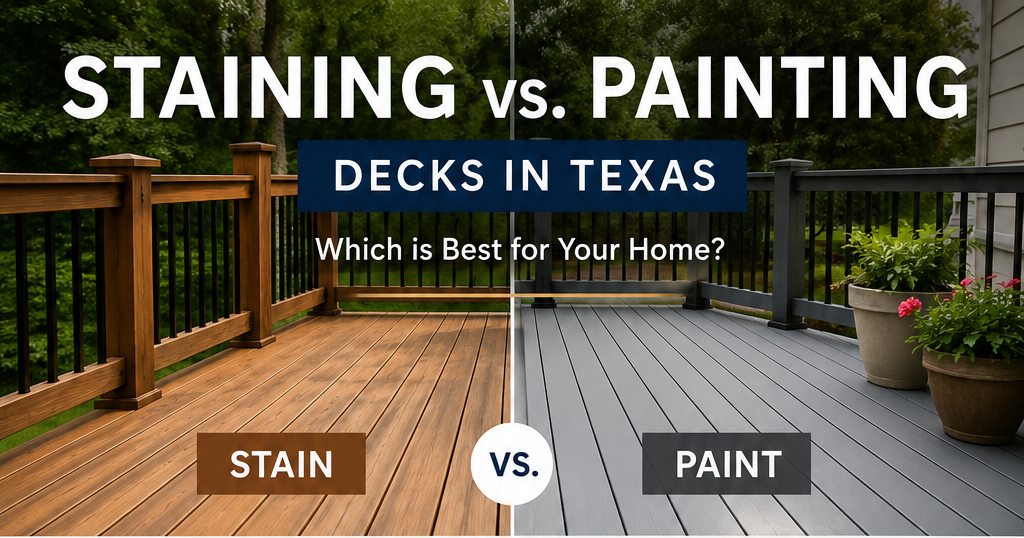
Paint forms a protective coating on top of the wood, completely covering the grain and creating a solid color finish.
Stain penetrates into the wood, enhancing its natural appearance while providing protection from moisture and UV exposure. Depending on the product, stain can be transparent, semi-transparent, or solid color.
Why Stain Is Usually the Better Choice in Texas
It Handles Texas Weather Better. Wood naturally expands and contracts as temperatures change. In the Hill Country, decks can experience scorching summer heat, cool winter nights, and sudden rainstorms. Because stain penetrates the wood rather than sitting on top of it, it moves with the wood and is less likely to peel or crack over time. Paint creates a surface film that can eventually chip, crack, and peel as the wood moves underneath.
Easier Maintenance. One of the biggest advantages of stain is maintenance. When a stained deck begins to fade, it can usually be cleaned and re-coated. When a painted deck starts peeling, extensive scraping, sanding, and preparation are often required before repainting.
Preserves the Natural Beauty of Wood. Many homeowners choose a wood deck because they love the natural look of cedar, pine, or pressure-treated lumber. Stain allows the wood grain and texture to remain visible, creating a more natural appearance that fits perfectly with Hill Country homes and outdoor living spaces.
Better Long-Term Appearance. Paint can look beautiful when first applied, but once peeling begins, the deck can quickly look neglected. Stain tends to wear gradually and more evenly, making it easier to keep the deck looking attractive year after year.
When Painting a Deck May Make Sense
While stain is our recommendation for most wood decks, paint can be a good option if:
The deck has extensive cosmetic imperfections.
Previous owners already painted the deck.
You want a specific color that stain cannot achieve.
The wood is older and no longer attractive enough to showcase naturally.
Paint provides excellent coverage and can help hide surface flaws, but homeowners should understand that future maintenance is typically more involved.
Our Recommendation for Hill Country Homeowners
For most decks in Wimberley, Dripping Springs, San Marcos, and throughout the Texas Hill Country, we recommend a high-quality exterior deck stain.
A properly prepared and stained deck:
Highlights the beauty of the wood
Resists UV damage from the Texas sun
Is less likely to peel or crack
Is easier to maintain over time
Provides excellent protection against moisture and weathering
How Often Should a Deck Be Re-Stained?
Most wood decks in Central Texas should be inspected annually and re-stained approximately every 2–3 years, depending on sun exposure, foot traffic, and the type of stain used. South-facing decks and pool decks often require more frequent maintenance due to intense UV exposure.
Need Help Deciding?
Every deck is different. The age of the wood, previous coatings, sun exposure, and overall condition all play a role in determining the best finish.
At Ball Brothers Painting, we provide professional evaluations and can help you determine whether painting, staining, or restoring your existing deck is the best option for your home.
Contact Ball Brothers Painting today for a free estimate and expert advice on protecting your deck from the Texas elements.
Local. Honest.
Satisfaction Guaranteed.
Professional Painting for Residential
and Commercial Properties
Fully insured
melissa@ballbrotherspainting.com
Direct: 512.360.7062
© 2026 Ball Brothers Painting
Bring Out the Best.

